Your Camera Roll Is Full of Memories. Why Do So Few of Them Get a Second Look?
We take thousands of photos, but most of them eventually disappear into our camera rolls. What if a photo could become more than something you simply scroll past?
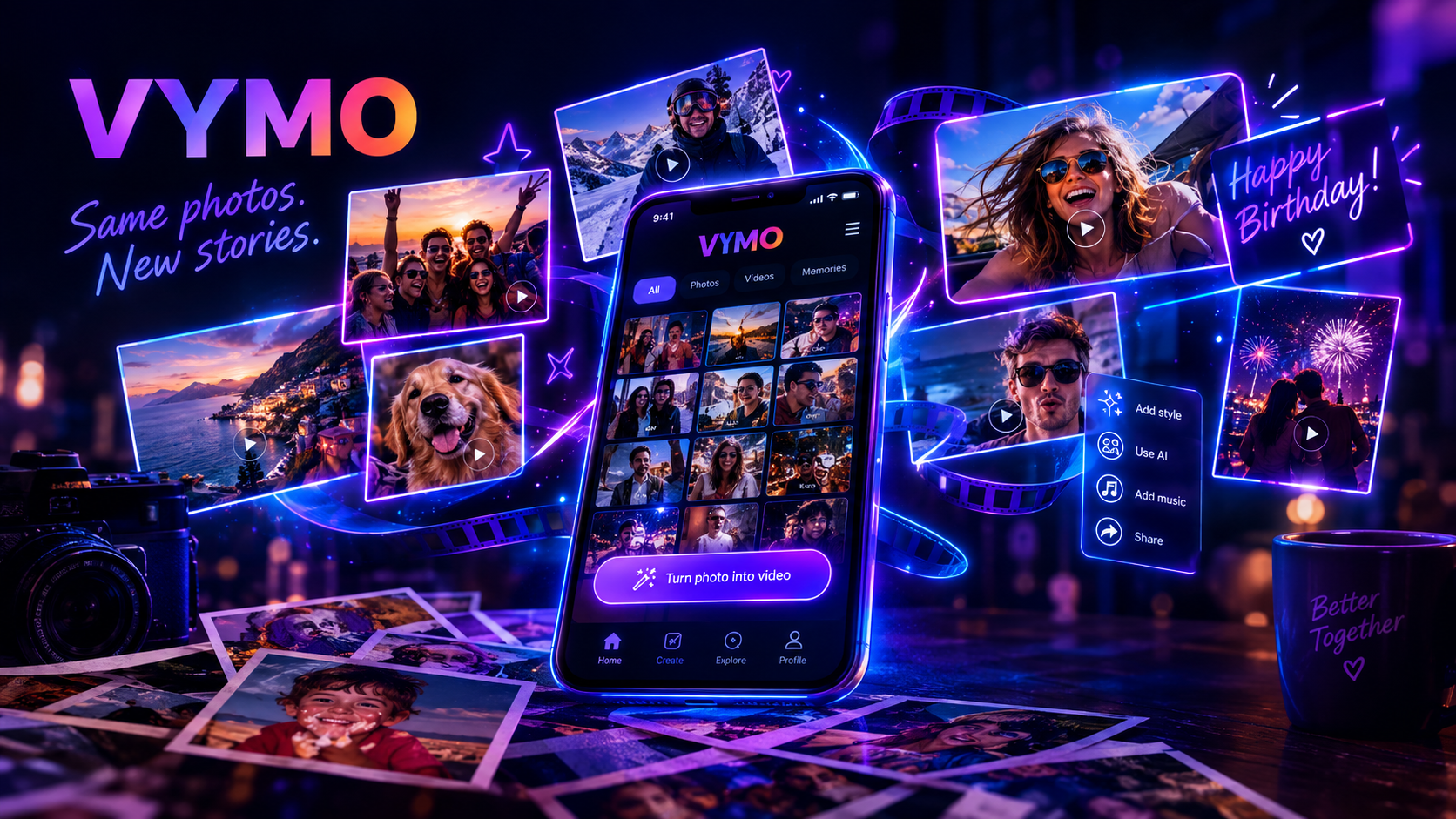
Take a look at your camera roll.
Not the last ten photos. Go further.
Keep scrolling.
There’s probably a vacation you forgot about. A friend you haven’t seen in months. A birthday cake. A dog doing something ridiculous. A blurry photo that somehow became your favorite. A screenshot you have absolutely no idea why you saved.
And then there are the photos you remember instantly.
You see one picture and suddenly you’re back there.
You remember who was standing next to you. What you were talking about. Where you went afterward. The joke that had everyone laughing. Even some completely pointless detail that has somehow survived in your memory for years.
The photo is just a picture.
But it opens the whole story.
That might be the real reason we take so many of them.
We don't really photograph things. We photograph moments.
A photo of your friends isn't just a photo of your friends.
It's that night.
A picture from a road trip isn't just a picture of a highway.
It's the music playing in the car, the bad gas-station coffee, the argument about which exit to take, and the person who somehow slept through all of it.
A family photo can hold an entire chapter of your life.
The funny thing is, none of that is actually visible in the picture.
The camera didn't capture the jokes.
It didn't capture the conversations.
It didn't capture what everyone was thinking.
It captured one frame.
Your brain filled in the rest.
And maybe that's why old photos can hit so much harder than we expect.
Not because the photo itself changed.
Because you did.
You see it differently now.
What if a photo didn't have to be the end of the story?
For a long time, a photograph was the finished product.
You took the picture. That was the moment.
Today, that's not necessarily where it has to end.
The same photo can become something else.
A joke you send to a friend.
A birthday surprise.
A short video from an old trip.
A ridiculous little story built around one embarrassing picture.
A family memory turned into something you can share with someone who wasn't there.
And that shift is more interesting than the technology behind it.
Because the interesting question isn't really, "What can AI do to this photo?"
It's:
"What could I do with this photo?"
That question is much more personal.
The best ideas usually start with something completely ordinary
Imagine you find an old picture of your best friend.
It's not a great picture.
Actually, it's terrible.
That's probably why you love it.
You could send it with a laughing emoji and move on.
Or you could look at it and think, "Okay... this could be funny."
That's where the creative part starts.
Not with the software.
With the idea.
Technology can give you a ridiculous number of possibilities, but it doesn't know your friends.
It doesn't know why that particular picture makes you laugh.
It doesn't know that the guy in the photo once showed up at your house at midnight because you needed help.
It doesn't know that the family picture on your phone was taken on the last vacation everyone managed to take together.
You know that part.
And that's why the human idea still matters.
AI can help bring an idea to life.
It can't decide which memory is worth bringing back.
Your next great gift might already be in your phone
We spend a surprising amount of time trying to figure out what to give people.
What do you buy for someone who already has everything?
What do you get your best friend when another gift card feels a little too easy?
What do you send someone when you want to say something without writing the same old message?
Sometimes the answer is already sitting in your camera roll.
A picture from college.
A ridiculous photo from a road trip.
A family snapshot.
An old vacation picture.
That one photo everyone in your group still laughs about.
Those things have something a store-bought gift can't really reproduce.
They're yours.
They belong to a shared story.
And that's what makes them valuable.
You don't necessarily need to give someone something new.
Sometimes you just need to give an old memory a new reason to exist.
This is where VYMO gets interesting
You can think of VYMO as a place to make personalized videos.
That's true, but it's not the most interesting way to look at it.
The more interesting idea is what happens when you give people a place to turn random thoughts into something they can actually share.
Maybe you have a photo.
Maybe you have a joke.
Maybe you want to surprise a friend.
Maybe you have a completely ridiculous idea that shouldn't work — which is often a pretty good sign that it might.
And maybe you create something other people want to use, too.
That's where VYMO becomes more than a collection of videos.
People bring the ideas.
Creators turn those ideas into templates.
Other people take them somewhere new.
Someone adds their own photo, their own friend, their own story.
And suddenly one idea can become hundreds of different moments.
The technology makes that possible.
People are what make it interesting.
A photo can have a sequel
That's probably the part I like most.
A photo used to be a way of saying, "This happened."
Now it can be the beginning of another little story.
Take an old picture of your friend wearing something ridiculous.
Turn it into a birthday video.
Find a vacation photo from five years ago.
Make something that brings the whole trip back for the people who were there.
Take a family photo that hasn't been opened in forever.
Give it a completely unexpected new life.
Or find a random picture of someone you haven't talked to in a while and send it with:
"Look what I found."
You don't even need a special occasion.
Sometimes the occasion is simply that you remembered someone.
And that can be enough.
Maybe that's what we actually want from technology
We're surrounded by tools that can make things faster, smarter and more impressive.
That's useful.
But there's something else technology can do that feels a little more human.
It can help us notice things we've stopped noticing.
An old picture.
A forgotten joke.
A friend we haven't called.
A moment we thought we'd forgotten.
A story that was sitting quietly in our phone the whole time.
The goal isn't to replace the memory.
It's to give the memory somewhere to go.
Maybe that's why a good video can be more than a video.
It can be a reason to laugh.
A reason to call someone.
A surprise.
A gift.
A tiny reminder of a time when everyone was together.
And sometimes, that's all it takes to turn an ordinary photo into something worth sending.
Your camera roll might already have the next story
You don't need to wait for a birthday.
You don't need a holiday.
You don't need a perfect picture.
You probably don't even need a particularly good idea.
Start with something you already care about.
A person.
A memory.
A terrible photo.
A moment you almost forgot.
Then ask one simple question:
What else could this become?
That question is where the fun starts.